Guides · Updated · 8 min read
Canadian baking measurements: the 250 ml cup, the butter block and the flour
Why a US recipe comes out heavier in a Canadian kitchen: the 250 ml cup against the 236 ml cup, the 454 g butter block against the stick, Canadian all-purpose flour against American, cake and pastry flour, lard against shortening and a cups-to-grams converter for both cups.
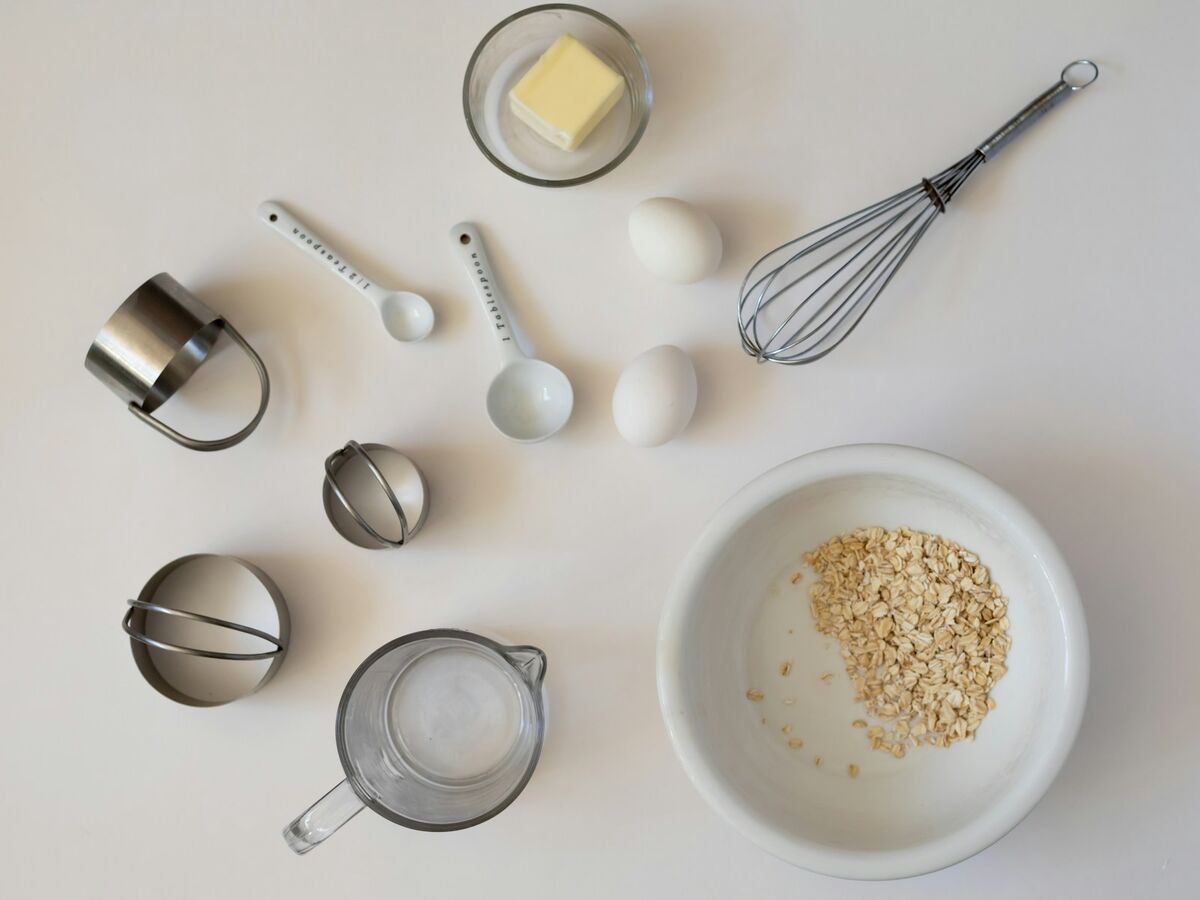
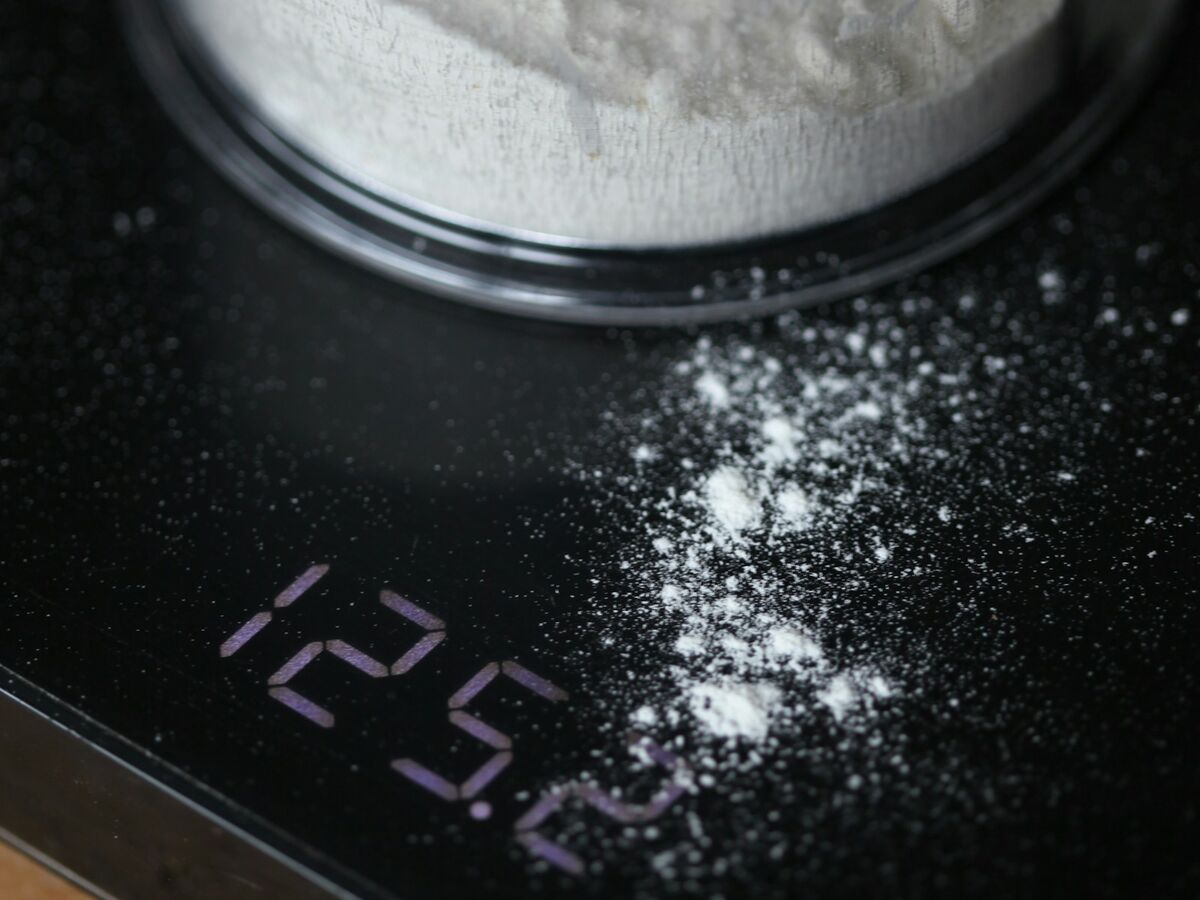
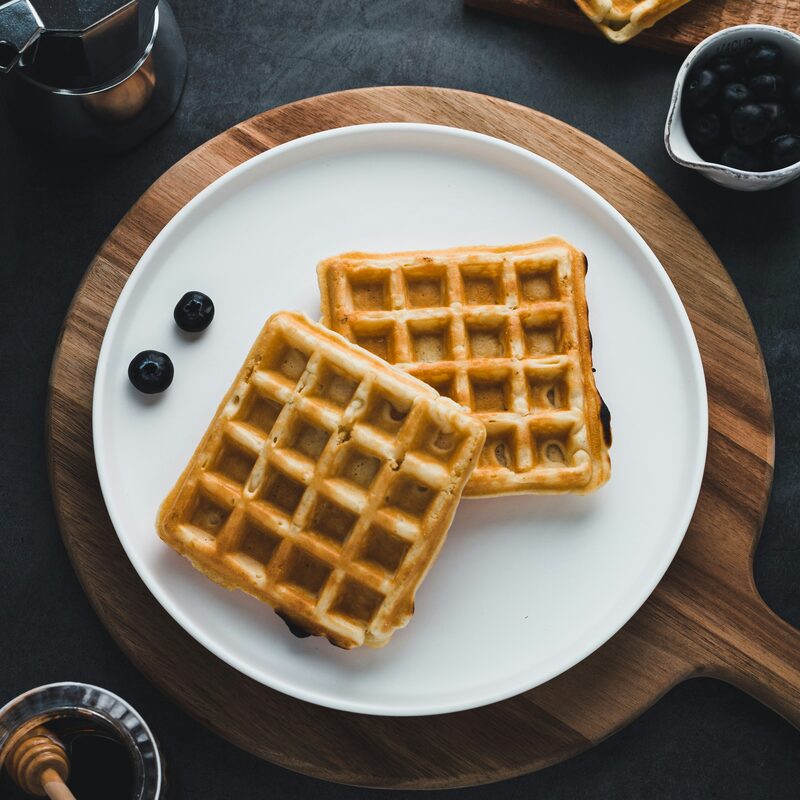
A US recipe made in a Canadian kitchen with Canadian cups and Canadian flour comes out heavier and drier than the photo. Nothing is wrong with the recipe. The cup is bigger and the flour is stronger, and the two errors add up in the same direction. Weighing removes the first. A spoonful less flour fixes the second.
The cup
- a Canadian metric cup
- 250 ml
- a Canadian metric cup
- a US customary cup
- 236.6 ml
- a US customary cup
- more flour, sugar and everything else in each Canadian cup
- 5.7%
- more flour, sugar and everything else in each Canadian cup
Canada adopted the metric cup in the 1970s. The United States kept the customary cup. Most measuring sets sold in Canada are marked 250 ml and most US recipes assume 236.6 ml, so each cup of flour in a US recipe comes out about 7 g heavy. Over three cups that is 20 g, a sixth of a cup, enough to turn a soft cookie into a cakey one. Spoons are the same in both countries: 15 ml and 5 ml.
The fix is a scale. Grams are grams in every country, and a US recipe written in grams needs no conversion. When a recipe gives only cups, the converter below turns it into grams for the cup the recipe meant.
Cups to grams, both cups
Cups to grams, both cups
Grams for the amount in a US cup (236.6 ml) and a Canadian cup (250 ml). Spoons are the same in both.
120 g
with a US cup
125 g
with a Canadian cup
Flour is spooned into the cup and levelled. Rounded from King Arthur Baking’s ingredient weight chart and USDA FoodData Central.
Butter and fats
The block and the stick
454 g block113 g stick
Canadian butter comes in a 454 g (1 lb) block. A US stick is 113 g, half a cup, 8 tablespoons. Cut the block in four and each quarter is a stick. A 250 g brick is a little over two sticks.Tenderflake and Crisco
lardvegetable shortening
Tenderflake is lard, rendered pork fat: the flakiest pastry and a faint savoury note. Crisco is vegetable shortening: neutral, vegetarian, softer at room temperature. Swap one for one by weight. Butter can stand in for either at the same weight with a less flaky, better tasting crust.Cream
35%18%10%
Canadian whipping cream is 35 per cent fat and stands in for US heavy cream (36). Table cream or coffee cream is 18 per cent, close to US light cream (20). Half-and-half is 10 per cent in both. Homogenized milk is whole milk, 3.25 per cent.Margarine in old recipes
oleo
Oleo on an old card is margarine. Use butter at the same weight. Soft tub margarine has more water than a block and will not cream the same.
Flour
- protein in Canadian all-purpose flour
- ~13%
- protein in Canadian all-purpose flour
- protein in US all-purpose flour
- 10–12%
- protein in US all-purpose flour
- protein in cake and pastry flour
- ~8%
- protein in cake and pastry flour
Canadian all-purpose flour is milled from hard red spring wheat and sits at about 13 per cent protein, where US bread flour sits. US all-purpose is milled from softer wheat. More protein means more gluten and more water absorbed. That is why a US cookie recipe spreads less and bakes chewier in Canada, and a US cake comes out tighter. Bread is the exception: Canadian all-purpose makes a US bread recipe better.
Weigh the flour
That removes the cup error. The protein difference remains, and it is the smaller of the two.Hold back a spoonful of flour, or add one of liquid
In a US cake or cookie recipe, take out a tablespoon of flour per cup, or add a tablespoon of milk. Do one, not both.Mix less
Stronger flour builds gluten faster. Stop stirring a muffin or a cake batter as soon as the flour is wet.Use cake and pastry flour where a US recipe says cake flour
They are the same thing under two names. To make it from all-purpose, take out 2 tbsp per cup and add 2 tbsp cornstarch, then sift.
Names that differ
| Canada | United States | Note |
|---|---|---|
| Icing sugar | Confectioners’ or powdered sugar | The same. Canadian icing sugar has cornstarch in it, as the US one does. |
| Cake and pastry flour | Cake flour | The same. |
| Whipping cream, 35% | Heavy cream, 36% | Swap freely. |
| Table cream, 18% | Light cream, 20% | Swap freely. Not half-and-half. |
| Homogenized milk | Whole milk | 3.25 per cent fat. |
| Golden corn syrup | Light corn syrup | Swap freely. British golden syrup is a different thing, made from cane. |
| Fancy molasses | Unsulphured or light molasses | Cooking molasses is darker and stronger; blackstrap is not a swap for either. |
| Sweet milk (old cards) | Milk | As opposed to sour milk or buttermilk. |
| Large egg, 56 g and up | Large egg, 57 g | The same grade. |
Oven
Most Canadian ovens are marked in Fahrenheit, and most Canadian recipes give both. A fan (convection) oven runs hotter at the same dial setting, so set it 20 °C or 25 °F lower than a conventional recipe and start checking at three quarters of the time.
| °F | °C | Fan °C | Gas mark |
|---|---|---|---|
| 275 | 140 | 120 | 1 |
| 300 | 150 | 130 | 2 |
| 325 | 160 | 140 | 3 |
| 350 | 180 | 160 | 4 |
| 375 | 190 | 170 | 5 |
| 400 | 200 | 180 | 6 |
| 425 | 220 | 200 | 7 |
| 450 | 230 | 210 | 8 |
| 475 | 240 | 220 | 9 |
Cups to grams, the chart
One cup, levelled, for the ingredients that matter most. The US column is the figure a US recipe means; the Canadian column is what a 250 ml cup of the same ingredient weighs.
| Ingredient | US cup, g | Canadian cup, g |
|---|---|---|
| All-purpose flour | 120 | 127 |
| Whole wheat flour | 113 | 119 |
| Granulated sugar | 198 | 209 |
| Brown sugar, packed | 213 | 225 |
| Icing sugar | 113 | 119 |
| Cocoa powder | 84 | 89 |
| Rolled oats | 89 | 94 |
| Butter | 227 | 240 |
| Honey | 340 | 359 |
| Milk | 244 | 258 |
Rounded, from King Arthur Baking’s ingredient weight chart and USDA FoodData Central. Flour is spooned into the cup and levelled; a scooped cup can weigh 150 g.
Where Forktales fits
When a recipe goes into your Forktales recipe box, write the amounts the way you measured them, in grams where you weighed. A recipe scanned from a US card keeps the card’s cups, so add a note with the grams you landed on the first time you make it. In cook mode the amounts are in big type beside each step, so a note like “120 g, not a Canadian cup” is in front of you when you measure.