Tales · · 5 min read
How to collect family recipes, including the ones nobody wrote down
How to collect family recipes for a family cookbook or your own recipe box: photographing old cards, cooking beside the person who knows the dish and measuring the pinch.
Part of the guide Organizing recipes
Every family has a dish that only one person makes properly. The recipe is either on a card that leaves out the important part, or it is not written down at all. Collecting it means getting both: the card and what the cook does that the card does not say.
Start with a list of dishes, not people
Ask everyone which dishes they would miss. A short list of those dishes, with who makes each one, tells you where to start. Put the oldest cooks first. The recipes that are lost are the ones nobody asked about in time.
Photograph the cards first
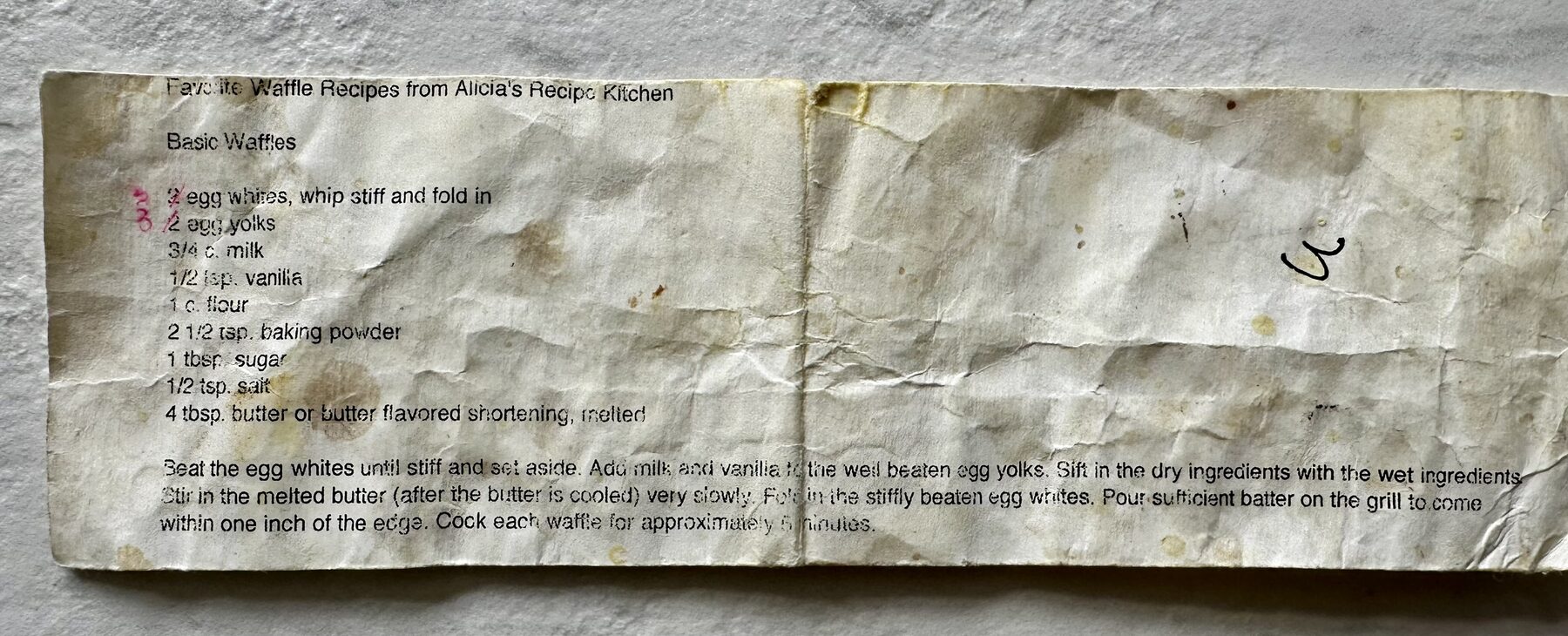
Before anyone types anything, photograph every card, clipping and margin note you can find. Lay each one flat on a dark surface near a window, shoot straight down and include the back if something is written there. Keep the photos even after the recipes are typed up. The handwriting is part of what the family is keeping.
Cook it beside the person who makes it
A card says “flour to make a soft dough”. The cook knows how soft. The only way to get that onto paper is to be in the kitchen when they make it. Ask to cook it with them, not to watch.
- Measure what they do. Bring measuring spoons and a kitchen scale. When they add a pinch, catch the next pinch in a spoon first. When they pour, note the level in the cup.
- Ask what they are looking for. “How do you know it is ready?” gets you the colour, the smell or the sound that no timer replaces.
- Film the hands. A short video of the kneading or the folding shows what a paragraph of description cannot.
- Write down the changes. Most family recipes have moved over the years. Ask what used to be different and why it changed.
Write the recipe up the same week
Type it up while the afternoon is fresh. Use real amounts, number the steps and keep the cook's own words where they carry something: “until it smells like toast” is a better instruction than a time. Put the cook's name on it.
Then send it back to them to check. They will correct something. That correction is the part the card was missing.
Keep the story with the recipe
A line or two above the ingredients is enough: whose recipe it is, when it gets made and who always asks for it. It is what makes a family cookbook different from any other collection of recipes.
Keep them in one place the family can reach
A printed family cookbook is a fine gift. It cannot take a new recipe once it is printed. Keep the working copy somewhere everyone can see and add to, and print when there is an occasion. The guide to organizing recipes covers the format and the filing.
Where the recipes go
With Forktales you can photograph a recipe card and get it typed up to check against the original. It lives in your recipe box with its source line, and family members you are friends with on Forktales see it too.